PILLAR 02 · REAL-WORLD ASSETS & TOKENISATIONN° 02

RWA: When Real-World Assets Become Programmable

Real estate, Treasury bills, bonds, commodities: understanding the legal and technical bridge between a physical asset and an on-chain token.

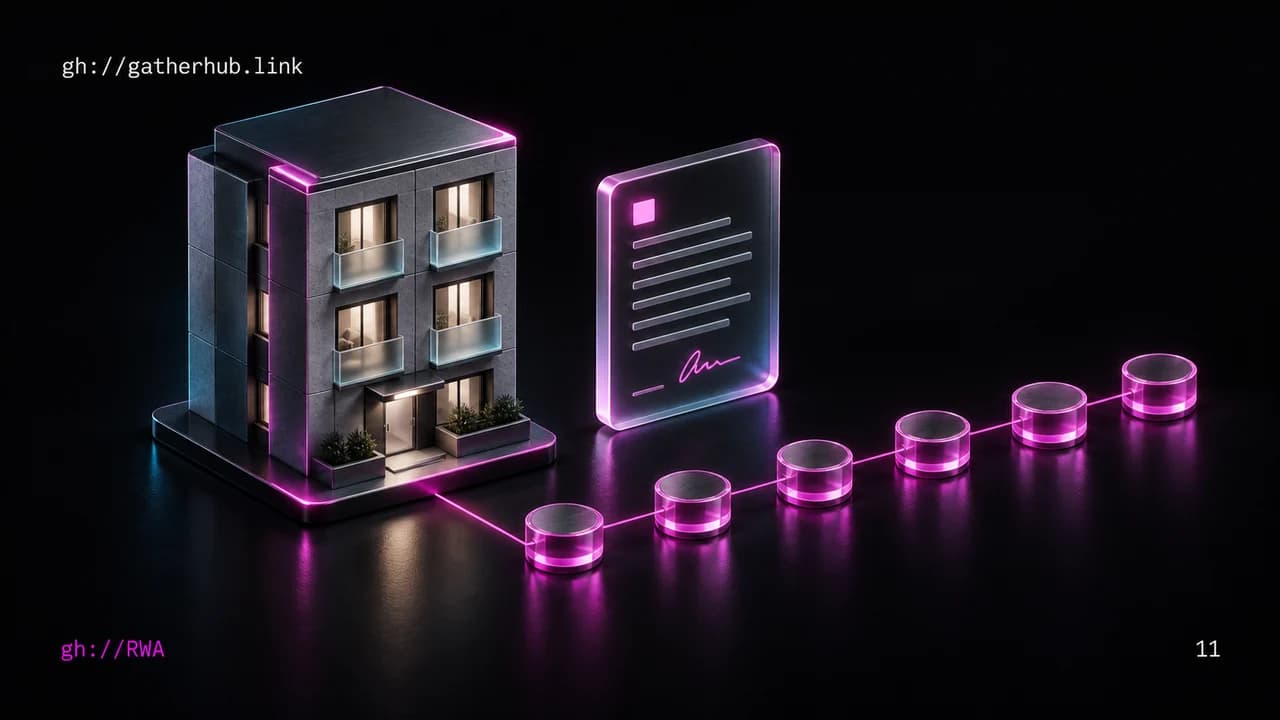
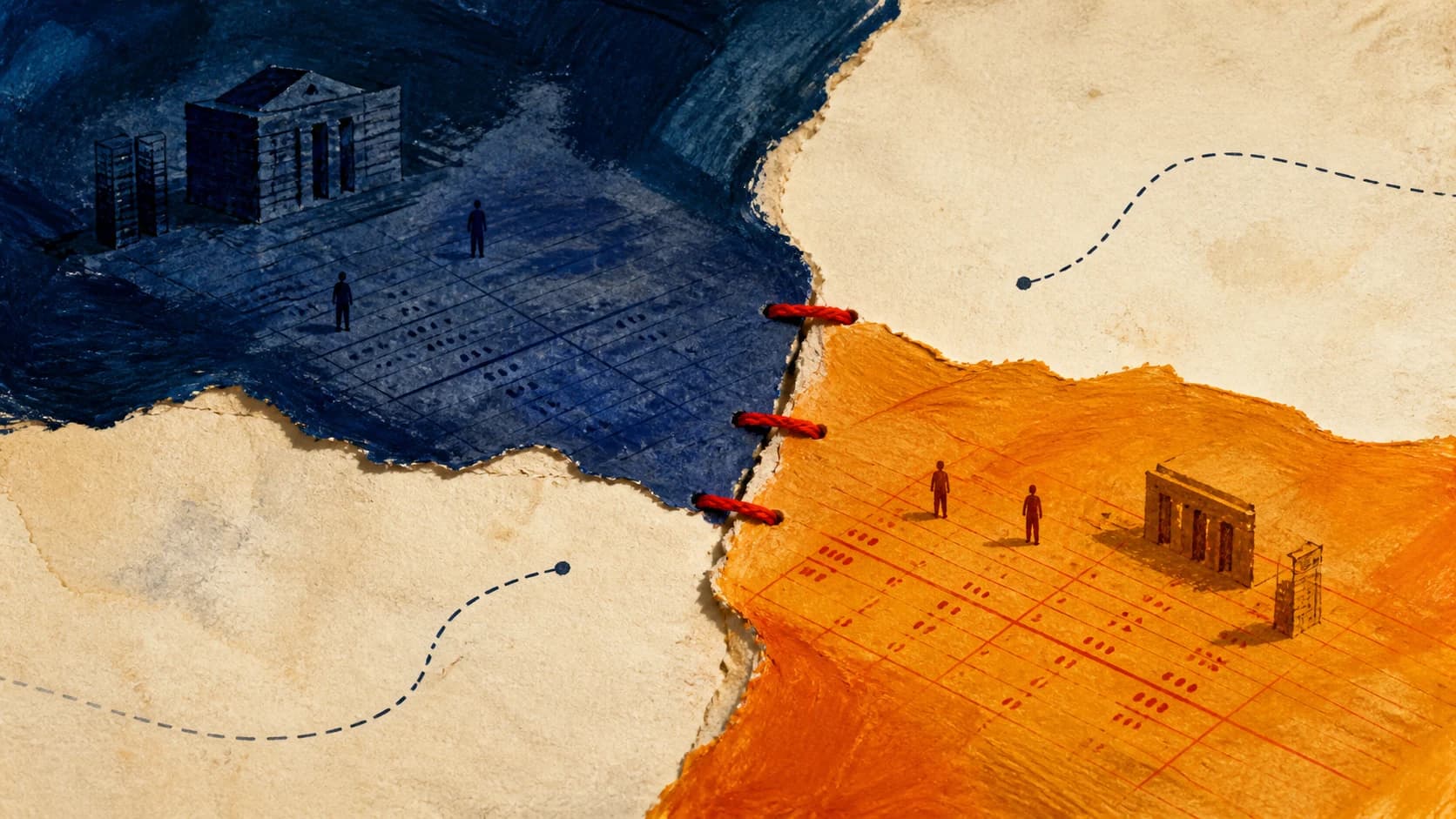
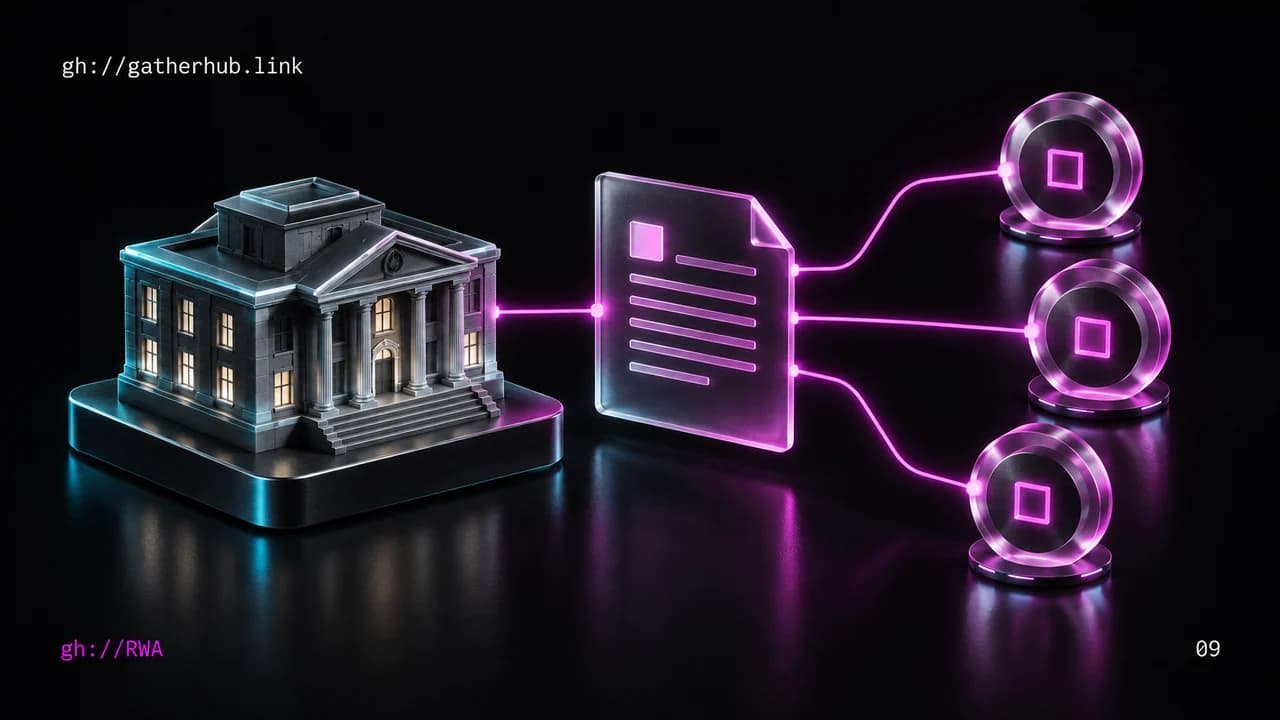
An RWA (Real-World Asset) is a tangible or traditional financial asset whose economic or ownership rights are represented by a token on a blockchain. The token is not the building or the gold bar itself: it is the programmable digital title legally bound to that asset.

4 LayersAsset · Law · Oracle · Token

A sound RWA always connects a verified asset, a legal wrapper (SPV), an audited custodian, and a smart contract.

T+0Atomic settlement

Where traditional finance takes 2 to 5 business days (T+2) to settle securities, an on-chain transfer settles in seconds.

FractionsProgrammable granularity

A €5M institutional asset (real estate, bond) can be fractionalised into digital units accessible from €50 or €100.

ARCHITECTURAL CROSS-SECTION

The 4-Layer Architecture of a Tokenised Real-World Asset

To evaluate an RWA project without getting blinded by buzzwords, inspect the four layers connecting the physical asset to your wallet.

01LAYER 01 · OFF-CHAIN

The Underlying Asset (Real Estate, Sovereign Debt, Gold, Credit)

The real source of value and yield in the physical or financial economy.

MECHANISM

An income-producing building, US/EU Treasury bills paying interest, or allocated gold bars in a vault.

PROOF & VERIFICATION

Requires independent valuation, official registration (ISIN, land registry), and a regulated custodian.
02LAYER 02 · LEGAL BRIDGE

The Legal Wrapper (SPV, Trust, Regulated Issuer)

Legally bind token ownership to an enforceable right in a court of law.

MECHANISM

A dedicated Special Purpose Vehicle (SPV) holds the asset and issues shares or bonds whose official registry is mirrored on-chain.

PROOF & VERIFICATION

The offering memorandum specifies exactly what you hold: equity, debt instrument, rental claim, or revenue share.

03LAYER 03 · VERIFICATION

Audits, Proof of Reserve (PoR) & Oracles

Ensure tokens circulating on-chain always match the assets held in custody.

MECHANISM

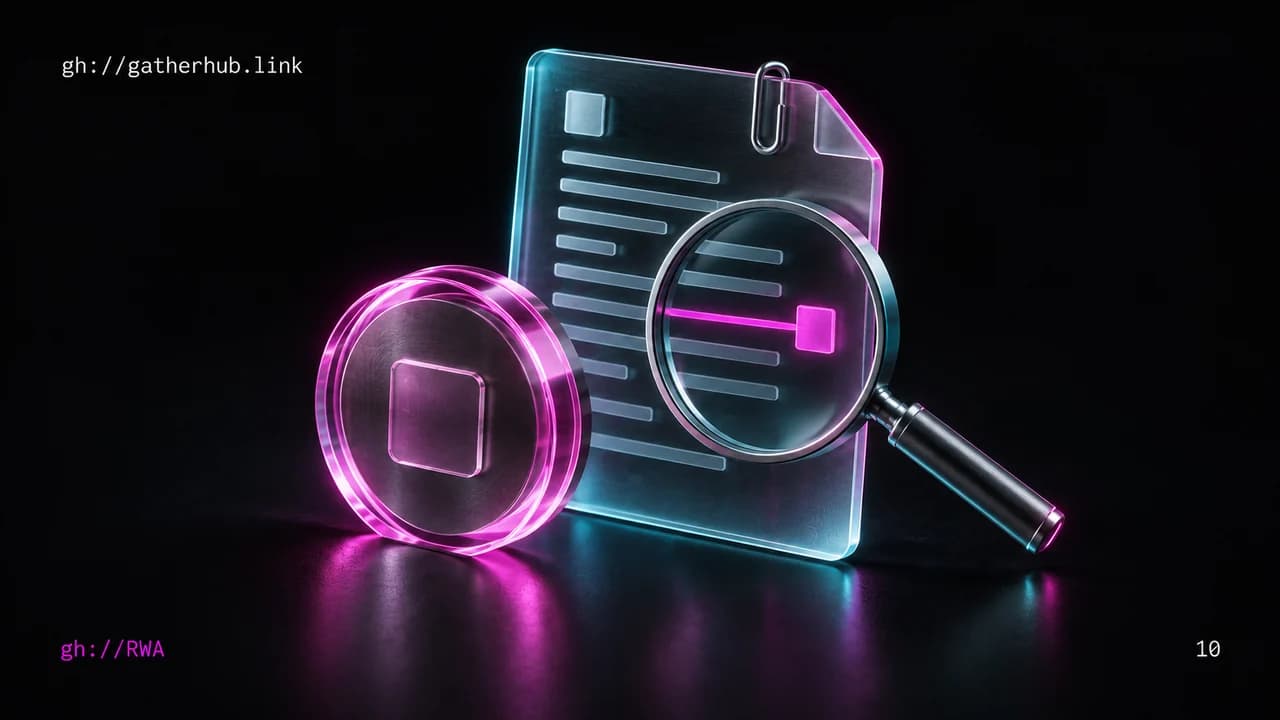
Auditors publish attestations and oracles (e.g., Chainlink Proof of Reserve) feed Net Asset Value (NAV) and reserve data to the smart contract.

PROOF & VERIFICATION

Technical circuit-breakers prevent minting new tokens if off-chain reserves are not verified.

04LAYER 04 · ON-CHAIN

RWA Smart Contract & Compliance (KYC / Whitelist)

Automate custody, compliant transfers, and yield distribution.

MECHANISM

RWA tokens often embed a compliance whitelist (e.g., ERC-3643): only `0x` addresses that passed KYC verification can hold or receive the security token.

PROOF & VERIFICATION

Rental income or bond coupons are paid out in stablecoins directly to eligible wallets with full accounting transparency.

COMPARISON MATRIX

The 4 Major Families of RWA Today

DimensionRWA CategoryMechanism & Concrete ExamplePrimary Due-Diligence Check
1. Sovereign Debt & T-BillsTokenised money-market funds & short-term government bondsThe issuer holds Treasury bills in a regulated bank and issues a token passing yield to holders.Verify the custodian bank, fund jurisdiction, and redemption terms.
2. Fractional Real EstateShares or bonds backed by rental propertiesAn SPV owns the building; each token entitles the holder to a pro-rata share of net rent paid in stablecoins.Distinguish direct equity ownership in the SPV from an unsecured debt note.
3. Commodities (Gold, Metals)Standardised physical assets stored in audited vaults1 token = 1 fine troy ounce of physical gold stored in a vault, transferable 24/7 and redeemable.Check independent vault audits and minimum physical redemption thresholds.
4. Private Credit & InvoicesReal-world business financing via on-chain liquidity poolsLenders supply stablecoins to finance vetted corporate loans or trade receivables at a fixed yield.Real-world borrower default risk: a blockchain cannot prevent a company from defaulting.

CRITICAL PERSPECTIVE

The RWA Truth Filter: On-Chain vs Off-Chain

What the Architecture Guarantees

  • Mathematical proof of token ownership in your wallet and a transparent history of yield distributions.
  • Automated coupon or rent payouts in stablecoins without layers of manual middlemen.
  • Programmable fractionalisation and compliance rules enforced directly by the smart contract.

What Requires Your Vigilance

  • Off-chain dependency: if the property manager mismanages the building or tenants default, yield drops.
  • KYC & Whitelist rules: unlike permissionless tokens, regulated RWA securities can usually only move between verified wallets.
  • Secondary liquidity: being able to transfer a token technically in 3 seconds does not guarantee an immediate buyer at your target price.

FREQUENT QUESTIONS

Plain-Language Answers

If I buy a tokenised building unit, is my name directly on the land deed?

Almost never directly on the municipal land deed. Typically, a dedicated legal entity (SPV) is recorded on the deed, and your token represents a share or bond issued by that SPV.

What happens if I lose access to my wallet holding a regulated RWA?

Unlike purely anonymous crypto assets, regulated RWA issuers (using standards like ERC-3643) link your `0x` address to your verified KYC identity. Most include a legal recovery procedure to burn the lost token and reissue it to your new wallet after identity verification.

Are stablecoins (USDC, EURC) considered RWAs?

Yes — they are the most widely used RWAs in existence! Fiat-backed stablecoins turn bank deposits and short-term Treasury bills into tokens that settle instantly on-chain.

IN-DEPTH GUIDES

Explore Each Mechanism Step by Step

27 dossiers